Walk right into any treatment center on a Tuesday afternoon and you can feel it: the hum of initiative, the small success, the exercised calmness of parents juggling routines, feelings, and kinds. I remember sitting beside a mommy called Tasha as her kid exercised making use of an interaction tool. He tapped a switch for "extra," then searched for with a grin that filled up the room. That word took months of job, a funding fight for the device, training sessions, and a medical professional that rejected to allow things stall. None of that taken place by accident. It took place due to the fact that a network of individuals, programs, and an identified household pulled together, step by step.
Disability solutions and support companies typically work in the history, however their fingerprints are almost everywhere when a child obtains the ramp they need, a young person lands a very first job, or an aging parent receives reprieve care at simply the best minute. Think about them as a knotted rope: campaigning for, medical expertise, useful logistics, and emotional assistance woven into something strong enough to lug an entire family via unsure terrain.
What "assistance" looks like when you live it
Support is not a single program or an one-time checklist. It is a choreography. Family members interface with public firms, exclusive clinicians, institutions, companies, and recreation center, all of which have different timelines, lingo, and criteria. An experienced instance supervisor from a Disability Services and Support Organization discovers a family members's rhythm and assists them keep beat.
I worked with a teen, Mateo, that required a work treatment evaluation after a growth spurt changed exactly how he moved via his day. By the time I satisfied him, consultations had been canceled twice, and the family members's transportation voucher expired. What transformed the tide was straightforward, yet not easy: the nonprofit coordinator called the transit provider herself, located a night appointment two bus lines closer to the family's apartment or condo, and texted tips in Spanish. The therapy didn't get extra sophisticated. The gain access to did.
Underneath tales like Mateo's are loads of unglamorous tasks: intake forms, insurance coverage pre-authorizations, letters of clinical requirement, and school meetings. When those tasks straighten, momentum builds. When they do not, family members stall and energy drains pipes away.
The silent architecture of care
Most community-based support complies with a repeatable framework, even if it seldom looks neat from the outside.
First get in touch with is typically a call or a site kind. The most effective companies respond within 2 business days, clear up qualification, and book intake within a week. Timeliness matters. A three-week delay can imply a missed out on home window for an evaluation or a moms and dad losing work hours to uncertainty.
Intake collects the bones of a plan: medical diagnosis or presumed condition, living situation, current solutions, and instant worries. A great intake Disability services and support organization Willamina prevents interrogating family members, and it converts. If a parent explains, "He bolts when he hears loud sounds," a strong situation manager hears: sensory sensitivities, safety risk, require for environmental adjustments, and maybe a work-related treatment referral.
Assessment transforms that first sketch right into an actionable map. It covers day-to-day living tasks, interaction and movement, safety and security, social involvement, and caretaker capability. Theoretically, these are domains. In the real world, they show up as whether a teen can go across the road securely, whether morning regimens end in rips, and whether a moms and dad can make it through a day without a panic knot in their stomach.
Coordination web links the items: medical suppliers, school teams, employment support, and advantages. This is where numerous households lose steam without assistance, because every system has its very own policies. Experienced organizers recognize the order of procedures. For instance, they safeguard resilient clinical tools authorizations prior to organizing PT, so the therapist can train with the exact tool the customer will certainly make use of at home.
Review and adapt keep solutions relevant. Requirements change with a youngster's development, a task loss, or a brand-new diagnosis. I have actually seen quarterly check-ins stop dilemma by catching little shifts early: a caretaker's pain in the back, a young person's increasing isolation after leaving senior high school, a medication change that influences hunger and energy.
The structure is not awesome, but it is reputable. When companies value these steps and maintain the household at the center, the day-to-day ends up being manageable and wish becomes practical.
Money and paperwork, the twin gatekeepers
Funding drives accessibility. Also the most enthusiastic specialists can not provide a solution you can not pay for. Depending upon where you live, family members could depend on Medicaid waivers, state impairment funds, school-based services under concept, company insurance coverage, personal grants, or a jumble of all of the above. Navigating this puzzle is an ability in itself.
Two truths stand apart. First, eligibility is an ecological community. A kid might receive one program due to cognitive criteria but be denied another as a result of revenue limits or immigrant standing. Denials are not the end. Appeals succeed more frequently than families anticipate, particularly when come with by concrete paperwork. Second, timing matters almost as much as qualification. A Medicaid waiver waiting list may span months or years. Smart companies construct bridges, protecting acting assistances like area grants, sliding-scale counseling, or loaner equipment.
Families usually ask where to begin. A useful initial relocation is to provide existing diagnoses, records, and school records in one folder, paper or digital. Then, determine your key funding paths. If Medicaid gets on the table, start the application early, even if you are unclear. If employer insurance is key, request for an instance supervisor through the insurance provider. Several strategies designate a nurse or social worker that can speed up permissions. Keep names, days, and the idea of every phone call. It really feels laborious in the moment, but that log typically opens doors later.
The range of solutions that transform everyday life
Walk via a week with any type of family members using impairment solutions and you will see a living brochure of assistances. The mix adjustments, yet a couple of categories appear repeatedly.
Clinical treatments sit high up on the listing. Occupational, physical, and speech-language treatment are the most usual, with developing therapy for more youthful youngsters and behavior solutions where ideal. Families often fret that treatment turns life into a routine of drills. The best clinicians insist on integrating objectives right into actual regimens: practicing zippering on the coat the child actually puts on, practicing office conversations at the restaurant where a young adult wishes to use, refining transfer strategies in the home's narrow hallway, not in a roomy center room.
Assistive innovation ranges from low-tech to complicated. It is the difference between a youngster signing up with a classroom conversation through an easy image board and a teenager using a speech-generating device to offer a discussion. It is a personalized seats system that prevents stress injuries, or a smart-home configuration that allows a person transform lights on individually. Frequently, equipment sits unused due to the fact that training is skimpy. Organizations that spending plan time for caretaker and individual training see greater gadget adoption and less frustration.
Respite care conserves family members. I have fulfilled moms and dads who admit they thought twice to use break since it seemed like surrendering. It is the contrary. Planned breaks maintain households stable. A few hours a week can bring back persistence and allow siblings appreciate their own activities. Crisis break can maintain a family members intact throughout clinical or behavioral flare-ups.
Education sustains bridge colleges and families. Advocates assist parents prepare for IEP meetings, analyze examination outcomes, and promote suitable accommodations. Numerous families do not realize they can ask for midyear IEP reviews if goals are off-track. Groups can readjust solutions much faster than you believe when prompted by information and concrete observations.
Employment solutions change the arc of adulthood. Task coaches, teaching fellowships, and company collaborations take some time to build, yet the payoff is self-respect and self-reliance. I collaborated with an organization that tracked work retention at 6, 12, and 24 months. The pattern was clear: prospects who had a gradual onboarding, with fading supports over the first 90 days, were twice as likely to strike the one-year mark contrasted to those who began at full speed with marginal coaching. Pace matters.
Housing and transportation develop or close doors. A wheelchair ramp and a trusted experience are the difference between staying at home and belonging to a neighborhood. Some nonprofits fund little home adjustments approximately a couple of thousand dollars. Others collaborate with city paratransit, ride-share vouchers, or volunteer driver networks. Households ignore the amount of solutions exist until a person lays them out plainly.
Mental health and wellness supports for caretakers and people round out the picture. Burnout is not an ethical falling short, it is biology. Counseling, colleagues, and functional stress and anxiety management lower crises. One mommy told me that a six-session counseling collection did much more for her kid's habits than any new treatment, due to the fact that she reacted in different ways. That is not magic, it is systems assuming at a human scale.
The power of peer networks
Professionals bring competence, yet peers offer belonging. In one moms and dad team I assisted in, everyone brought a tiny win per meeting. Often it was substantial, like an effective independent commute. Often it was moderate: a brand-new going to bed routine that reduced debates, documentation sent in advance of deadline, a weekend trip that worked. The group's vault of small victories ended up being a common playbook.
Peer mentors likewise communicate practical assumptions. They will certainly tell you which college principal in fact returns phone calls, for how long the neighborhood mobility device vendor is requiring to provide repair work, and what to pack for a neurodiversity-friendly trip to the zoo. That type of granular knowledge is the distinction between theory and lived success.
Not every team fits every household. Some like a WhatsApp string to a regular conference. Others want in-person link, not an additional screen. Great companies supply multiple formats, consisting of language-specific and culturally notified teams. Addition is not a leaflet in several languages, it is assistance that appreciates distinctions in how households communicate and make decisions.
When systems clash with real life
There is a space between policy and the kitchen table. Take into consideration appointment hours. Facilities usually run nine to 4. Parents function. Trainees have school. Family members end up selecting in between treatment and paychecks, or therapy and truancy letters. Organizations with extended hours or Saturday ports eliminate an unnecessary trade-off.
Another friction point is eligibility cliffs. A little income rise can tip a family off a subsidy, leaving them worse off. Some programs smooth these cliffs with progressive phase-outs or momentary expansions after job changes. Inquire about these alternatives. They are not always advertised.
Rural and tribal areas encounter distinct barriers, from lengthy travel distances to limited company availability. Telehealth has assisted, yet not consistently. A video require speech treatment can work well. A wheelchair fitting or sensory analysis, much less so. Crossbreed designs, where a neighborhood community employee companions with a remote professional, have a tendency to produce much better end results than telehealth alone.
Crisis feedback is a recurring failing point. Family members calling for aid throughout actions accelerations often fulfill police instead of skilled situation teams. A number of areas currently money mobile crisis devices with de-escalation training and mental health and wellness expertise. If you have access to such a team, program the number into your phone and share it with caregivers and colleges. Preparation beats panic.
Measuring what matters
Data can feel chilly when your emphasis is on a single child's needs, however measurement helps direct scarce sources. The numbers that matter are not always the elegant ones. Track wait times to initial appointment, follow-through rates for recommendations, tools shipment times, and caretaker stress levels utilizing basic scales. I have actually seen programs double down on costly treatments when the true bottleneck was the two-month lag to obtain an intake scheduled.
A reasonable benchmark assists. For instance, lowering time from referral to very first call to 2 days is possible for many companies with moderate procedure adjustments. Reducing no-show rates by verifying appointments using message, not just email, yields quickly improvements. Small functional success translate right into household stability.
Families can make use of the very same reasoning. Develop a basic dashboard for your family, absolutely nothing fancy. What are the leading three goals over the next 90 days? Perhaps it is consistent use of an interaction application, a successful bus adventure technique, and hopping on a Medicaid waiver list. Review monthly. When you track what you worth, you observe when the ground changes, and you can change before a trouble comes to be a crisis.
How to select a reliable partner
Finding the best Disability Services and Support Organization is part study, part conversation, and component digestive tract check. The website can look brightened while daily operations lag. Ask for specifics.
- How quickly do you schedule intakes, and what is the typical wait time for your services? What languages do you sustain for direct services and written materials? How do you train households to make use of assistive modern technology, and what follow-up do you provide? What is your policy for missed out on appointments and rescheduling? How do you measure results, and will you share those metrics with us?
Listen to how staff solution, not just what they claim. Do they supply instances? Do they value your time when organizing calls? Do they centralize info or send you on a scavenger quest? Trust fund the signals.
The caretaker's toolkit, developed from experience
Caregivers are the continuous in a changing landscape. Over time, you discover what to bring, essentially and figuratively. Keep a go-bag with treats, a favored convenience item, any type of essential medications, and a duplicate of clinical and college summaries. Shop electronic files in a cloud folder with clear names: "IEP 2025-01-12," "OTeval final," "Medicaidapproval _ letter." When somebody requests for proof, you prepare in one minute, not one week.
When a new service starts, request the plan in your own words: what will happen, exactly how frequently, that leads, how development will certainly be tracked, and who to speak to if something slips. If the strategy really feels unclear, state so. Unclear plans wander. Clear strategies move.
Pay attention to your very own power. If you feel fear prior to every consultation, something requires to alter. Possibly it is the time of day, the clinician's technique, or the large quantity of solutions. Downsizing quickly to shield the relationship with your child can be wiser than pushing with another month of splits. I have actually encouraged families to stop one therapy for a period, refocus on one priority, then rebuild. Progress returned to because the family came back with capacity.
Collaboration, not hierarchy
The healthiest groups deal with family members as equal companions. You will certainly recognize you have an excellent collaboration when experts ask about your proficiency and follow your lead on the things you recognize finest: your kid's triggers, your early morning routine, your social standards. They will certainly promote with you, not for you in a way that sidelines your voice.
That spirit extends to institutions and employers. When a young adult I dealt with landed a work at a grocery store, the task instructor came close to the manager not with a request for charity yet with an efficiency strategy: clear tasks, aesthetic lists, and a feedback schedule. Within a month, the supervisor was bragging about the new hire's precision at stock. Satisfaction is infectious when expectations and sustains align.
The long arc, seen up close
Families typically ask the length of time it takes to see adjustment. The straightforward solution is that adjustment has a various rhythm in each domain name. A wheelchair repair work may shift life in a day. A communication system may take three to 6 months to really feel all-natural. An employment journey could unfold over a year: discovery, abilities building, trial placements, after that a secure duty. The delay feels long when you remain in it. A clear timeline, with landmarks and a couple of fast victories early, maintains energy alive.
The greatest makeovers I've experienced were not flashy. A daddy found out secure training strategies and quit throwing out his back, which meant the household could most likely to the park on weekends once more. A teen discovered to prepare his wardrobe the evening in the past, which shaved 10 mins off the morning scramble and lowered debates by fifty percent. A grandmother finally accepted reprieve and began attending church once more, which recovered a whole layer of social support the household did not recognize it needed.
Where companies shine, and where they stumble
Great companies share behaviors. They return phone calls. They educate their team in social humility, not simply the buzzwords. They set up solutions around genuine people's lives. They own their blunders and repair them. They fund staff time for control, not just billable hours, due to the fact that they know sychronisation is the glue.
Even solid companies stumble. Staff turnover disrupts relationships. Financing cycles produce solution voids. A new electronic document system can ingest months of attention. Families feel these shakes initially. When an organization communicates very early and transparently concerning disturbances and supplies interim solutions, trust fund holds. Silence erodes it.
If you struck a wall, utilize layered advocacy. Beginning with your direct call. If that stops working, go up a degree with a details request and a succinct recap of the issue and influence. Copy the staff who need to know. If you still stall, look for external advocates: a state ombudsman, a lawful help clinic, a moms and dad center, or a neighborhood disability civil liberties team. Several families are amazed by just how efficient a well-aimed, respectful letter can be, particularly when it points out the appropriate policy or deadline.
Building a village, one partnership at a time
The phrase "it takes a town" is soft up until you view it function. The therapist who messages a quick video clip after a session so a parent can exercise in your home. The bus driver that finds out a brand-new course to shave ten minutes off a long commute. The neighbor that installs a borrowed ramp on a Saturday. The case manager that notifications a moms and dad's exhaustion and schedules respite without making them ask. These are not additionals. They are the daily acts that transform solutions right into support.
Families are not passive receivers in this town. They educate professionals what jobs. They inform the next family about the useful clerk at the benefits workplace. They contact the institution board when policy shifts threaten incorporation. They push for evening hours and translation solutions. They hold the system liable, not out of anger, yet out of love for someone whose life relies on follow-through.
A functional path forward
If you are at the start, start little. Choose one priority that will certainly transform every day life, and construct a strategy around it with your chosen Disability Services and Support Organization. Gather your files. Ask clear questions. Track development. Commemorate the increments, because they are not tiny when they add up.
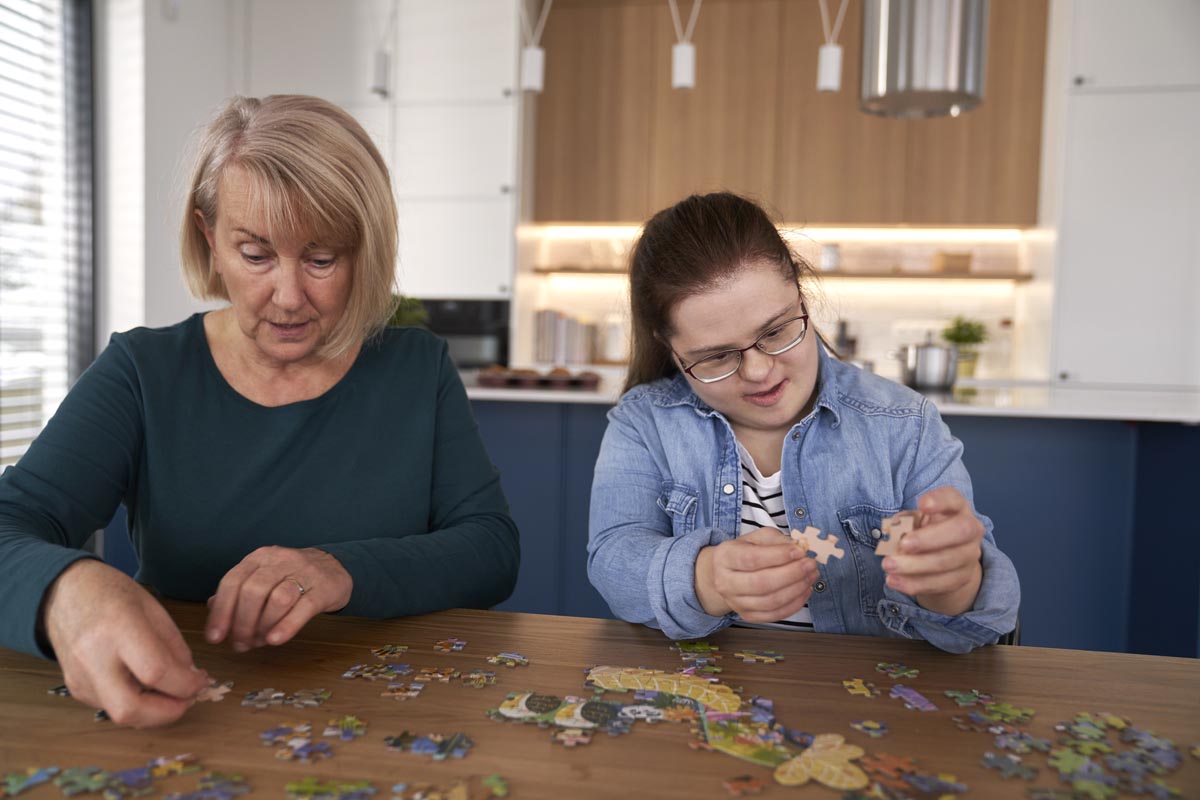
If you are further along, scan for drift. Are services still lined up with your objectives? Is any kind of piece regularly draining pipes greater than it provides? Change without regret. Lives alter, so sustains need to too.
And if you function inside a company, seek the friction points you can smooth this month. Maybe it is adding night consumption ports, translating your top three types, producing a straightforward equipment tracking log, or developing a brief video clip collection revealing home methods in action. Tiny, dull improvements produce outsized relief for families.
The heroes in this Florence services for disabilities job do not stand on stages. They turn up, time and again, with forms printed, scooters billed, and plans that regard the messiness of the real world. The mother in the waiting room high-fiving her kid for pressing "extra." The planner that finds a method around a bureaucratic knot. The teenager that techniques a bus path till it feels ordinary. That is the day-to-day heroism of special needs solutions and support companies, and the family members who companion with them. It is constant, stubborn treatment that makes opportunity really feel close at hand.
Business Name: Essential Services Business Address: 536 NE Baker St, McMinnville, OR 97128, United States Business Website: https://esoregon.com/ Business Phone: +15038570074 About Business: Essential Services, established in 2018, is dedicated to providing exceptional intellectual and developmental disability services and support to individuals seeking empowerment and independence. Located conveniently at 536 NE Baker St in McMinnville, Oregon, we strive to create a welcoming and inclusive environment where individuals with disabilities can reach their fullest potential and live fulfilling lives.